Reviewed
Texas Cottage Food Starter Guide
41 citations 6 sources
$39 USDBuy the PDF
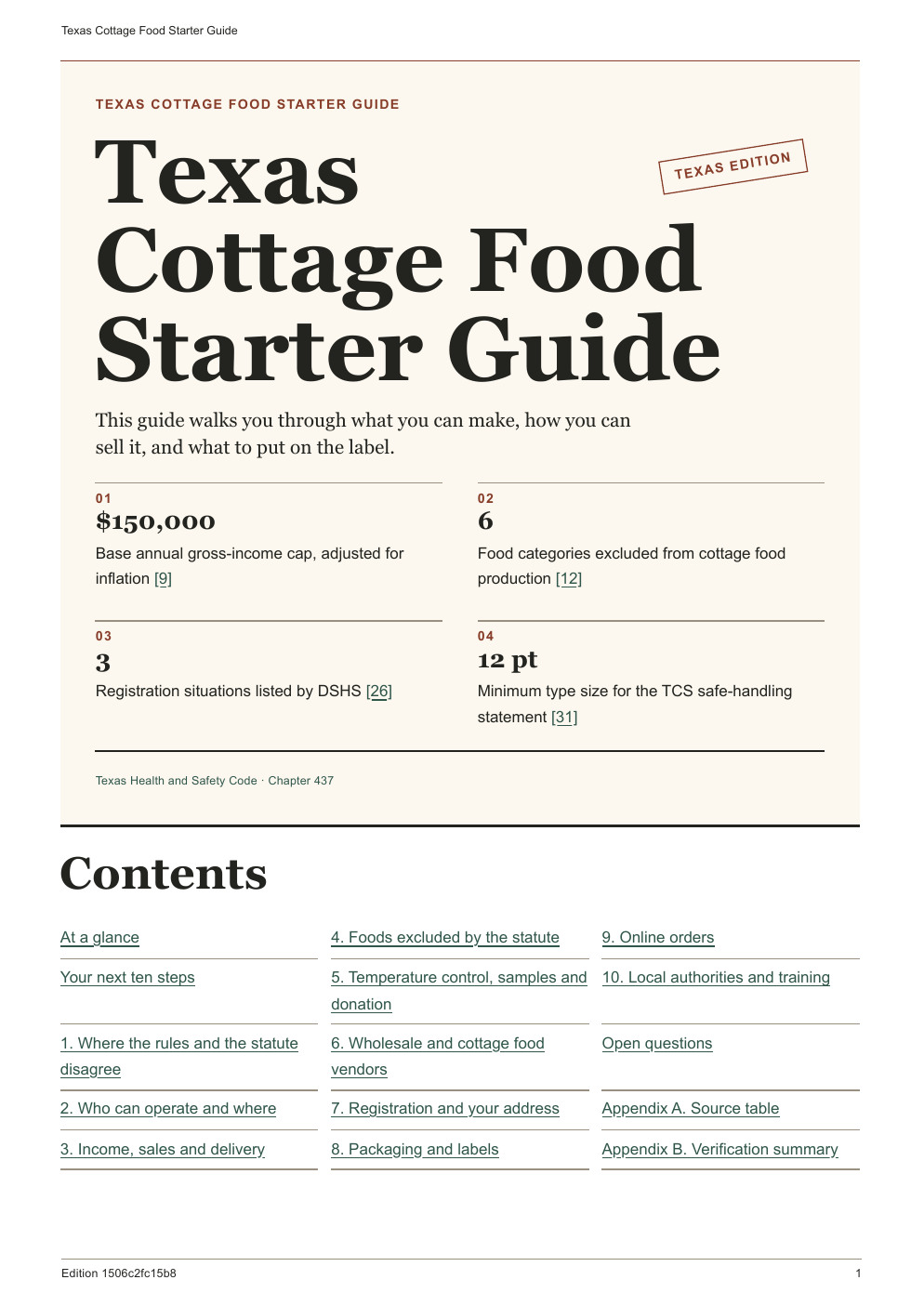
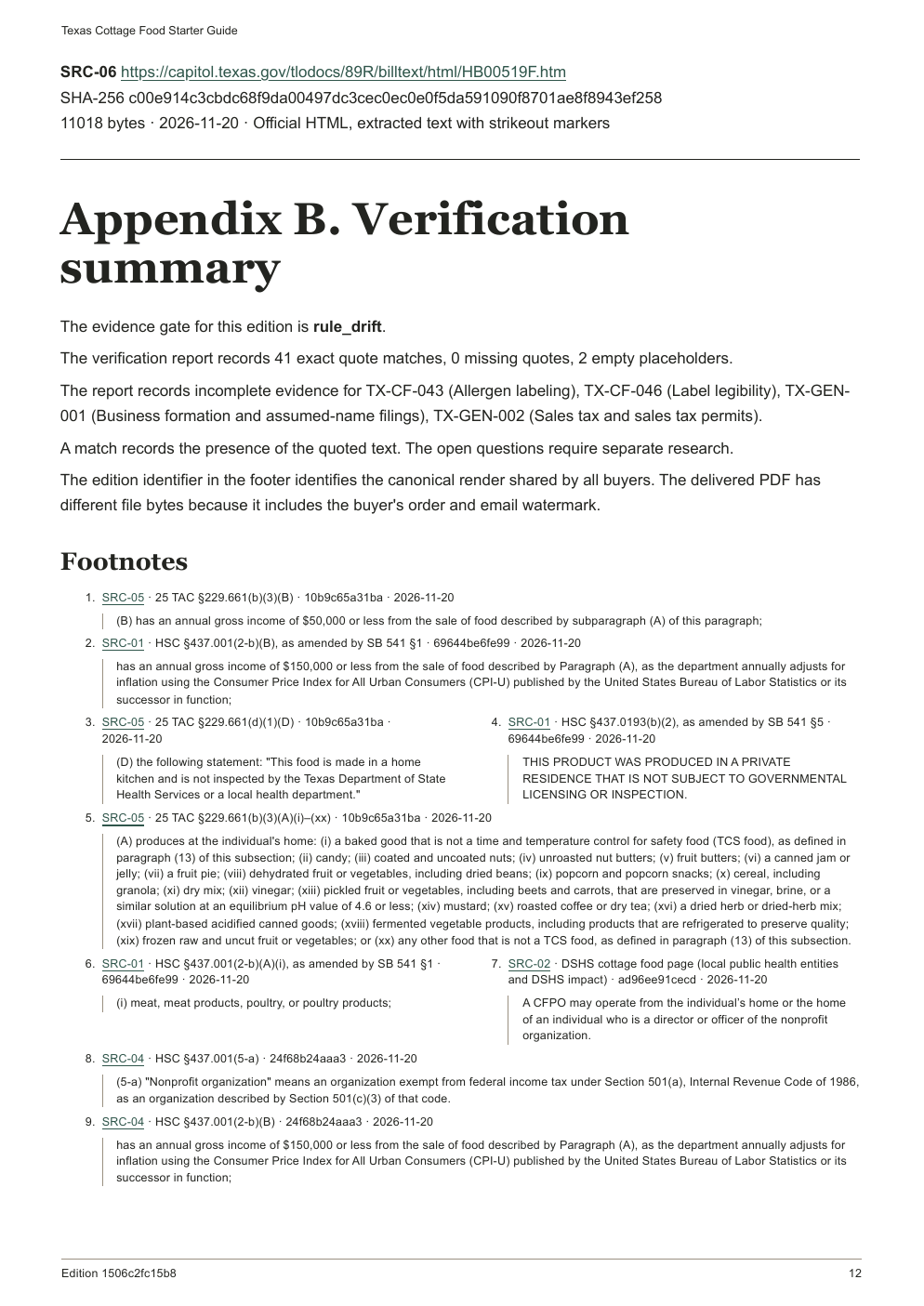
Sample pages
What this settles
- Which text should you follow when the rule and the statute disagree?Chapter 1
- Who can operate a cottage food business, and where can they prepare food?Chapter 2
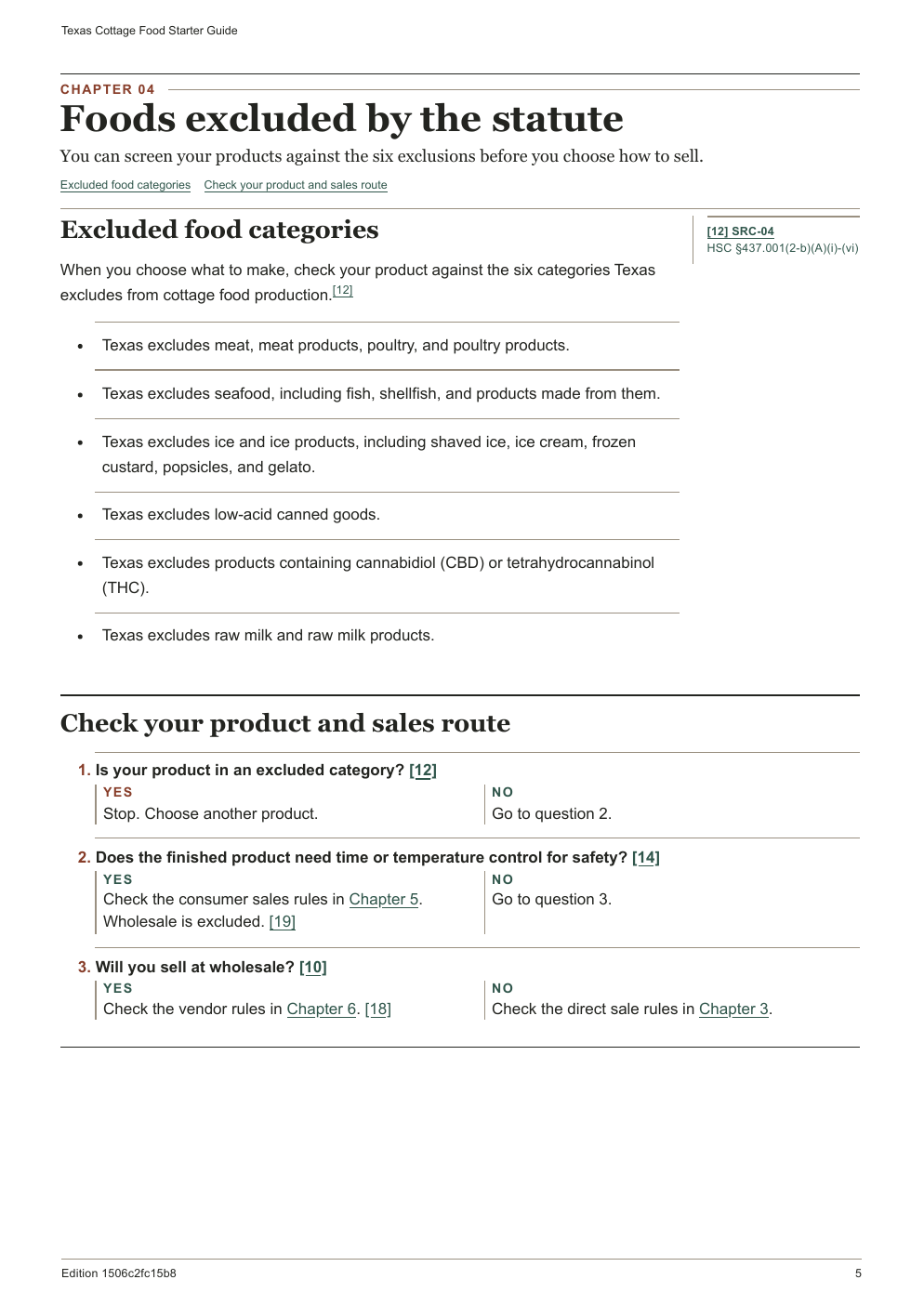
- Which foods does Texas exclude from cottage food production?Chapter 4
- What information belongs on your cottage food label?Chapter 8
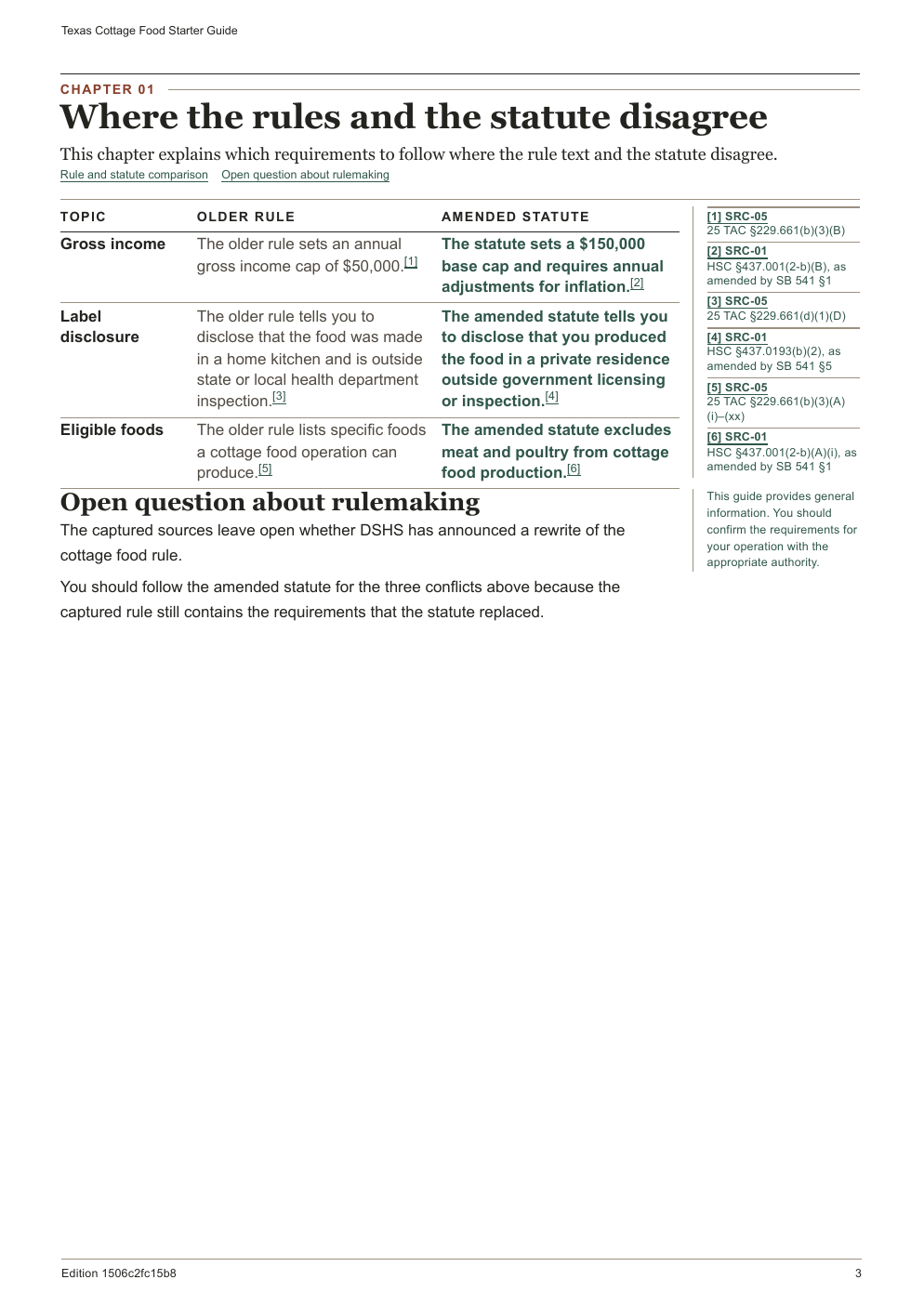
Where the rule and the law disagree
| Subject | What the rule says | What the law says |
|---|---|---|
| Gross income | The older rule sets an annual gross income cap of $50,000. | The statute sets a $150,000 base cap and requires annual adjustments for inflation. |
| Label disclosure | The older rule tells you to disclose that the food was made in a home kitchen and is outside state or local health department inspection. | The amended statute tells you to disclose that you produced the food in a private residence outside government licensing or inspection. |
| Eligible foods | The older rule lists specific foods a cottage food operation can produce. | The amended statute excludes meat and poultry from cottage food production. |
What you get
- 14 pages
- A4 PDF
- 12 months of updates
- 14-day refund window
Questions before you buy
- Is this legal advice?
- No. This guide provides general information. Business formation and assumed-name filings, sales tax, allergen labeling, and label legibility are open questions in the guide.
- What if my county says otherwise?
- Confirm the requirements for your operation with the appropriate authority. Chapter 10 covers the limits on local regulation, and Chapter 5 flags how the sampling standards apply away from farms and farmers’ markets as an open question.
- What changes in the next 12 months?
- Your purchase includes 12 months of updates. Chapter 1 leaves open whether DSHS has announced a rewrite of the cottage food rule.